 Alika
Alika
 Deutsch
 Português
 Español
 Română
 Bosanski
Transitional living
At the Centre for Home Care, people facing health challenges and their relatives practise everyday life for the return home. A temporary stay combines practical guidance, suitable support and shared planning.
Practise everyday life
Getting up, using the bathroom, preparing a meal: these tasks reveal how abilities, housing and support fit together. A typical stay of 3–21 days allows people to compare aids, adjust routes and repeat routines. People receiving care and their relatives choose a few concrete goals and explore what works for their home.
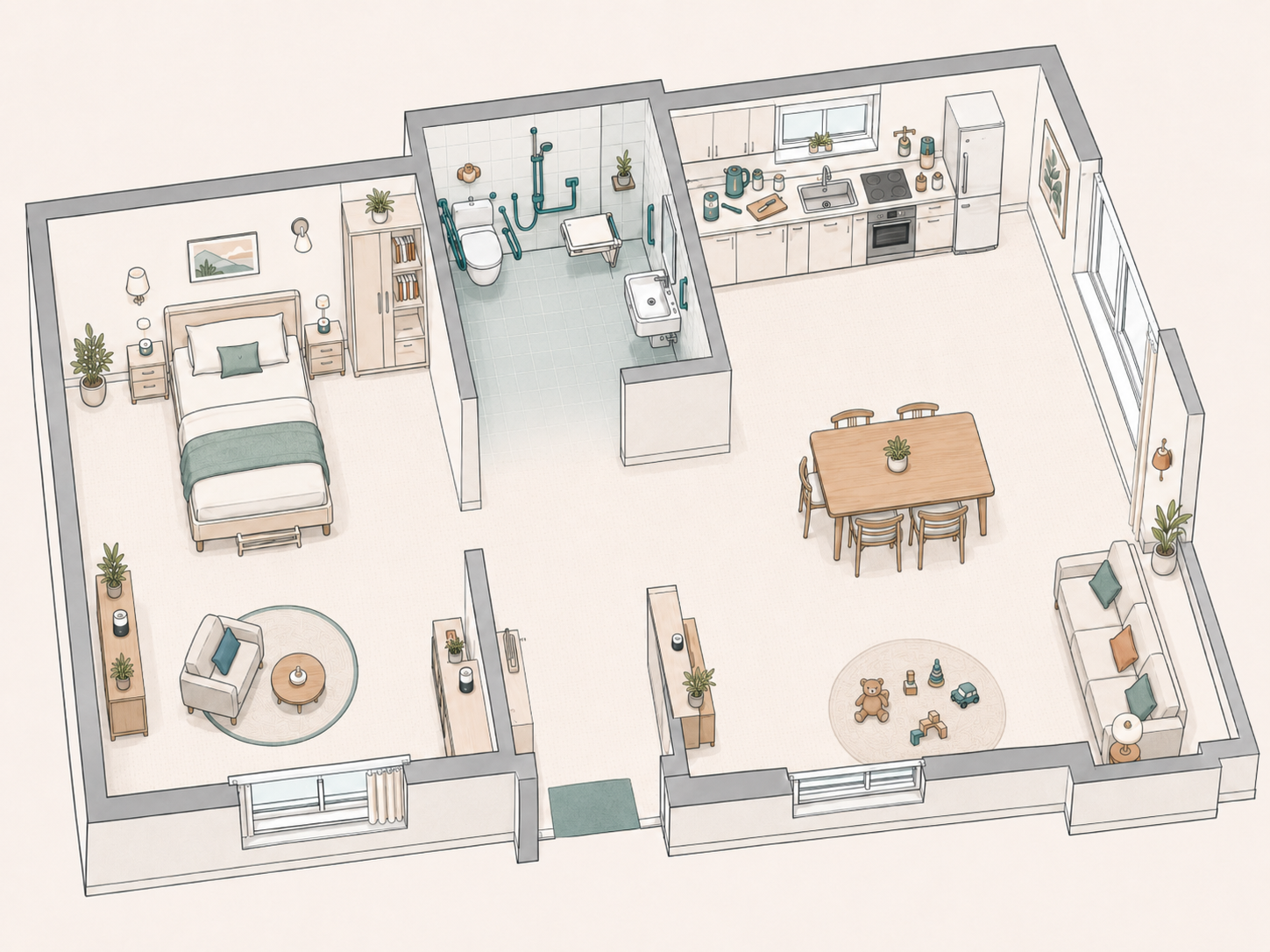
Time to learn
Relief creates room to practise without constant time pressure. Guidance gradually decreases; different times of day, fatigue or changed arrangements reveal how well learning holds up. Relatives practise too and agree tasks, breaks and backup. We investigate what is retained after the return home.
Support the return home
The transition plan connects practised tasks with the actual home, available services and named contacts. Follow-up at 30 and 90 days tracks use, support needs and burden. With research partners, we examine for whom housing, practice and technical adaptation make a lasting difference.
Concept
A ZHV is organised around the tasks that need to work at home. Specialised pathways bring together suitable rooms, aids and partners; social conditions and relatives’ perspectives belong in every pathway.
Requirements
A workable stay connects a suitable home with accessible professionals and clear responsibilities. Planning starts with the selected group’s day and night routines.
First steps
Let us start with one group and a recurring everyday difficulty. Together we develop the housing setting, partner cooperation and a first cycle that can be evaluated.
ZHV at IfWf
Information about transitional living, the ZHV concept and cooperation is available from IfWf at wohnforschung.org.
Visit IfWf